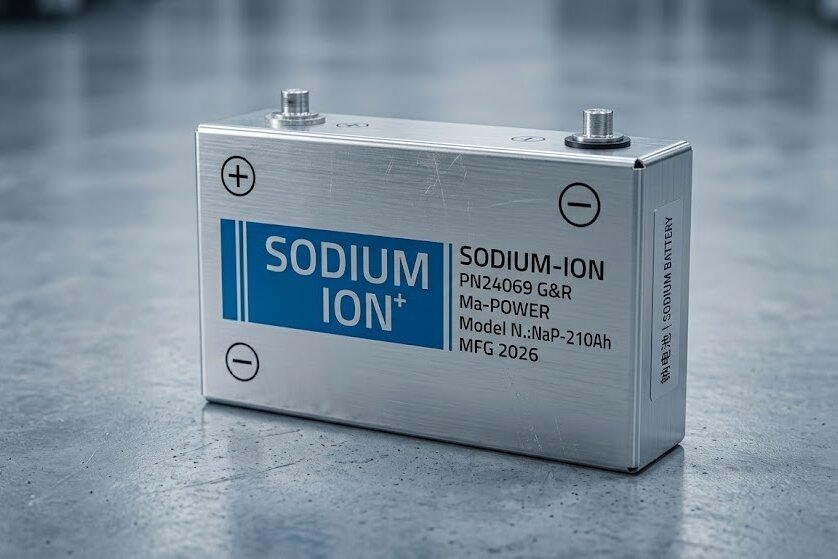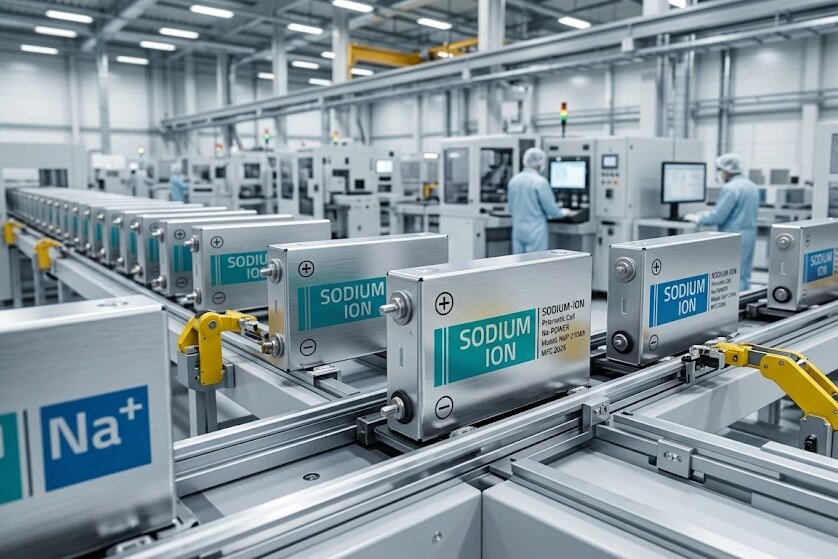
A sodium ion battery works on the same basic principles as a lithium ion battery, using ions moving between a cathode and an anode through an electrolyte during charge and discharge cycles, with sodium ions as the charge carrier instead of lithium ions. The chemistry is close enough to lithium ion that researchers describe both as rocking chair systems, with ions shuttling back and forth between electrodes. Research into sodium ion batteries dates to the 1970s and early 1980s, developed alongside lithium ion rather than after it, but the commercialisation of lithium ion by Sony in 1991 redirected most research investment away from sodium for the following three decades.
The primary structural argument for sodium ion is abundance. Sodium makes up approximately 2.74% of the Earth’s crust and is approximately 1,000 times more abundant than lithium, with reserves that are functionally unlimited, given the possibility of extraction from seawater. Many sodium ion chemistries also do not require cobalt, copper, or nickel, removing further supply concentration risk from the material stack. Interest in the chemistry revived in the 2010s as lithium costs rose and supply concentration concerns grew, and from 2023 to 2025 progress accelerated significantly in electrode performance, electrolyte formulation, and pilot manufacturing scale-up.
Sodium Ion vs Lithium Ion: Advantages of Chemistry
Sodium ion is not a universal replacement for lithium ion. The two chemistries suit different applications, and understanding where sodium ion has a structural advantage is more useful for procurement decisions than a general comparison.